The Reset Workout: A Simple Strength Plan You Can Do at Home
By Caroline Grey, Founder of Craft Your Body
Exercise is about energy expenditure. Everything you do throughout the day uses energy — walking to the car, carrying shopping, cleaning the house, even fidgeting at your desk. If you have an active job, you will naturally burn more than someone with a sedentary one. Small choices like taking the stairs instead of the lift, parking a little further away, or getting off the bus one stop early all add up.
That daily movement is called NEAT — Non-Exercise Activity Thermogenesis — and it absolutely matters. It contributes to your overall energy expenditure, supports circulation, helps regulate blood sugar and keeps your body from spending too much of the day still. But here is the important part: NEAT does not build your body.
Building strength, protecting muscle, supporting bone density and creating a body that feels capable and resilient requires something more intentional. It does not require a gym. It does not require fancy equipment. It does require a little structure, a little effort, and a willingness to start where you are.
Why strength matters more than ever after 35
From around our mid-30s onwards, we begin to lose muscle mass naturally. That process speeds up in midlife, particularly through perimenopause and menopause, when dropping oestrogen affects muscle, bone density, metabolism and body composition. The good news? Strength training is one of the most effective tools we have to slow that decline and, in many cases, reverse it.
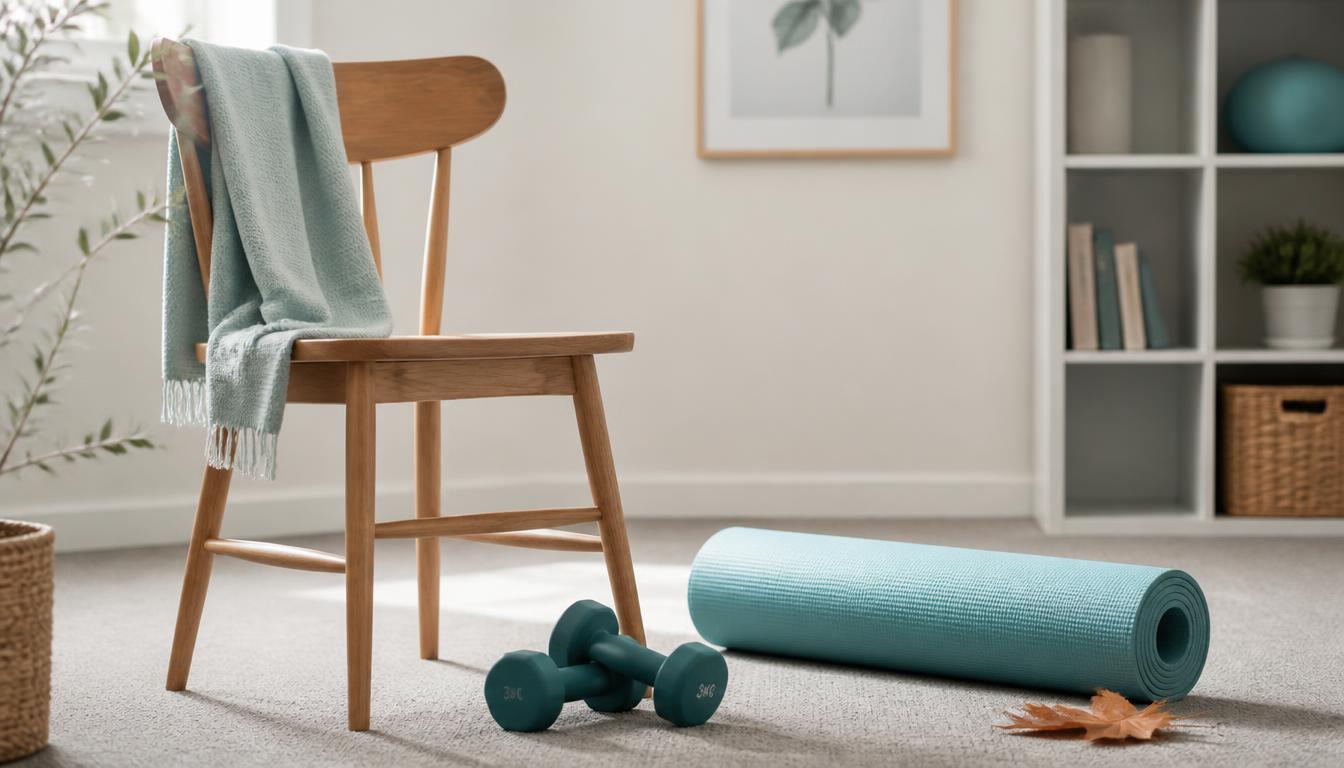
You do not need to lift heavy to benefit. You need to lift consistently. A pair of dumbbells, a sturdy chair and some floor space is enough to get started. The workout below is designed for women who are short on time, short on equipment, and perhaps a little unsure of where to begin. It covers the major movement patterns: squat, lunge, hinge, push, pull and core.
This is designed to get you started straight away. Over time, I do encourage women to lift heavier and make their strength training progressive — because that is where the real, lasting changes happen. If you would like help building a plan that grows with you, that is exactly what I do as your coach.
What you will need
- A sturdy chair without wheels or arms, pushed against a wall for safety.
- A pair of dumbbells or one kettlebell if you have them. If not, two tins of beans, two water bottles, or just your body weight will work to begin with.
- Enough floor space to lie down with your arms and legs extended.
- Comfortable clothing and trainers or bare feet on a non-slip surface.
The Reset Workout
Do this workout two to three times a week, with at least one rest day between sessions. Complete each exercise for the reps listed, rest for 30–60 seconds, then move to the next. Aim for 2–3 rounds in total, depending on how much time you have and how you feel.
A quick note on form: quality beats quantity every time. If you cannot complete all the reps with good control, reduce the reps, slow the movement down, or use a lighter weight. There is no prize for rushing.
1. Chair Squat or Goblet Squat
Targets: quads, glutes, hamstrings and core.
Stand in front of your chair with your feet about hip-width apart, toes pointing slightly outwards. Lower yourself down until your bottom just touches the chair, then stand back up by pushing through your heels. If you have a dumbbell or kettlebell, hold it at your chest for a goblet squat.
Reps: 10–12
Tip: Keep your chest lifted and your knees tracking in line with your toes. Use the chair as a guide for depth without sitting back and relaxing.
2. Reverse Lunge
Targets: quads, glutes, hamstrings and balance.
Stand tall with your feet hip-width apart. Step one foot back and lower your back knee towards the floor, keeping your front knee stable over your front ankle. Push through your front foot to return to standing. Alternate legs each rep.
Reps: 8–10 each leg
Tip: If balance is tricky, hold the back of your chair lightly with one hand. Keep your torso upright and avoid leaning forwards.
3. Glute Bridge
Targets: glutes, hamstrings, lower back and core.
Lie on your back with your knees bent and feet flat on the floor, hip-width apart. Press through your heels to lift your hips until your body forms a straight line from shoulders to knees. Squeeze your glutes at the top, then lower with control.
Reps: 12–15
Tip: To make this harder, place a dumbbell across your hips or lift one foot off the floor for a single-leg bridge.
4. Seated Dumbbell Shoulder Press
Targets: shoulders, upper back and triceps.
Sit tall on the edge of your chair, feet flat on the floor, holding a dumbbell in each hand at shoulder height with palms facing forwards. Press the weights overhead until your arms are almost straight, then lower them back to shoulder height with control.
Reps: 10–12
Tip: Keep your core engaged and avoid arching your lower back as you press. If you only have one weight, press one arm at a time.
5. Standing Dumbbell Row
Targets: upper back, lats and biceps.
Hold a dumbbell in each hand and hinge forwards from your hips, keeping a soft bend in your knees and a flat back. Let your arms hang down, then pull the weights up towards your hips, squeezing your shoulder blades together. Lower with control.
Reps: 10–12
Tip: Imagine you are starting a lawnmower — the pull comes from your back, not your arms. Keep your neck long and your gaze slightly forwards.
6. Press-Up
Targets: chest, shoulders, triceps and core.
Start in a high plank position with your hands slightly wider than your shoulders. Lower your chest towards the floor, keeping your body in a straight line from head to heels, then push back up. If a full press-up is too much, do it from your knees or with your hands on the seat of the chair.
Reps: 6–12, or as many as you can manage with good form
Tip: The chair option is excellent if you are building strength. The higher your hands, the easier the movement, so adjust the chair or a sturdy worktop to suit you.
7. Dead Bug
Targets: deep core muscles and spinal stability.
Lie on your back with your arms pointing towards the ceiling and your knees bent at 90 degrees, also pointing up. Slowly lower one arm back towards the floor behind you while straightening the opposite leg out along the floor. Return to the start and repeat on the other side.
Reps: 8–10 each side
Tip: Keep your lower back gently pressed into the floor throughout. If your back arches, reduce the range of movement.
8. Plank
Targets: core, shoulders and glutes.
Lie face down and lift yourself onto your forearms and toes, keeping your body in a straight line. Hold the position while breathing steadily. If full plank is too much, drop to your knees and keep the same straight line from hips to shoulders.
Time: 20–45 seconds
Tip: Do not hold your breath. Squeeze your glutes slightly and keep your hips in line — not too high and not sagging.
Free download: The Reset Workout guide
Print this off and keep it handy — the full workout, exercise list, reps and tips on one page, branded and ready for your fridge door or training log.
Download the Workout GuideHow to make it work for you
- Start with two sessions a week. Consistency matters more than intensity. Two sessions you actually do will always beat four sessions you plan and never complete.
- Track something simple. Note how many reps you managed, whether you used weights, and how the session felt. Progress is not always visible, but it is measurable.
- Warm up for five minutes first. March on the spot, circle your shoulders, do a few hip circles and gently move your spine. Your body will thank you.
- Add daily movement on top. This workout builds strength. Your walks, housework, gardening and stairs still count as NEAT — keep them happening.
What to expect
You will not finish this workout drenched in sweat and unable to climb the stairs tomorrow. That is not the point. The point is to move well, build a foundation, and create a routine that feels sustainable. Over the coming weeks you will likely notice your balance improving, everyday tasks feeling easier, and your confidence growing.
Strength training is a long game, especially in midlife. But it is one of the best investments you can make in how your body feels, functions and ages. Start here. Start small. And keep going.
Want a plan built around your body and your schedule?
If you'd like personalised strength coaching that fits your life, your hormones and your goals, book a free discovery call. If you can't see a convenient time, email me at hello@craftyourbody.com and I'll find a slot that works for you.
Book a Discovery Call