Omega-3 in Midlife — Why I Take a Fish Oil Every Day
By Caroline Grey, Founder of Craft Your Body
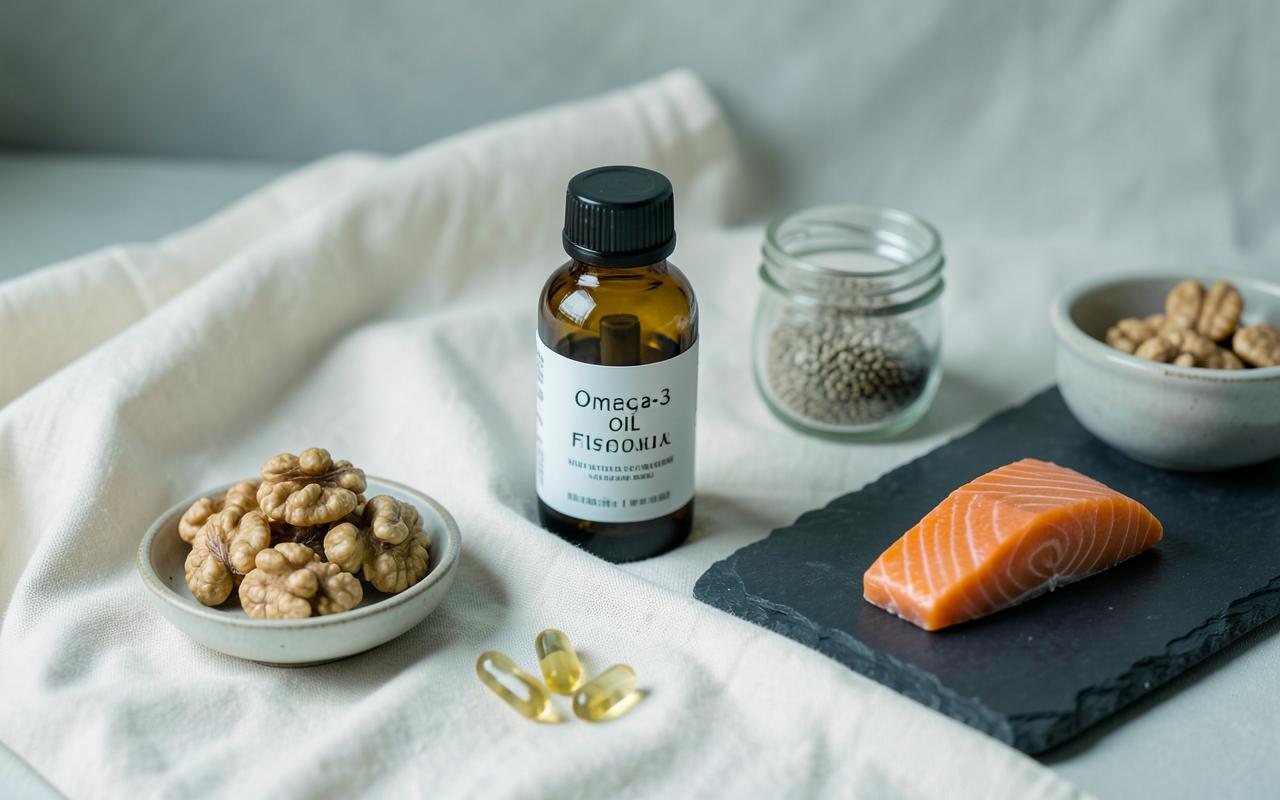
If I had to pick just a handful of supplements to keep in my cupboard, a good quality fish oil would be one of them. Not because it's fashionable, but because I know — from years of blood tests, genetic testing and simply paying attention to how my body feels — that I do better when I get enough omega-3.
Inflammation is one of the quiet drivers behind so many midlife symptoms: achy joints, slow recovery, brain fog, low mood, stubborn weight and skin that looks inflamed rather than rested. And one of the simplest, most evidence-backed ways to support a healthy inflammatory balance is to make sure you're getting enough omega-3.
What omega-3 actually is
Omega-3 is an essential fatty acid. "Essential" means your body cannot make it — you have to consume it through food or supplementation. The two most important long-chain omega-3s are:
- EPA (Eicosapentaenoic Acid) — best known for its anti-inflammatory and heart-supportive properties.
- DHA (Docosahexaenoic Acid) — a major structural fat in the brain and eyes, important for cognition, mood and vision.
Both are found in meaningful amounts in oily fish and in high-quality fish oil supplements. Plant sources like flax, chia and walnuts provide a different omega-3 called ALA, which the body has to convert into EPA and DHA — and that conversion is inefficient, especially as we get older. So while I love those foods, they don't replace fish oil for me.
The omega-6 problem — and why the ratio matters
Omega-6 is also an essential fat, and it isn't the villain it's sometimes made out to be. We need it. The problem is the balance.
The ideal ratio of omega-3 to omega-6 is thought to be somewhere around 1:1 to 1:3. In many Western diets, it's closer to 1:15 or even 1:20. That matters because omega-6, in excess, can be pro-inflammatory — not because it's harmful on its own, but because it competes with omega-3 for the same enzymes and tilts the body toward producing more inflammatory compounds.
Where does all that omega-6 come from? The biggest sources in the modern diet are:
- Vegetable and seed oils — sunflower, corn, soybean, rapeseed and safflower oils used in cooking and manufacturing.
- Processed and packaged foods — crisps, crackers, biscuits, pastries and snack bars.
- Takeaways and deep-fried foods — often cooked in cheap, repeatedly heated vegetable oils.
- Margarine and spreads — many are based on refined vegetable oils.
- Shop-bought salad dressings and mayonnaise — frequently made with omega-6-heavy oils.
I'm not saying never have these things. I live in the real world too. But if your diet is heavy on them and light on oily fish, your omega-3 to omega-6 ratio is almost certainly working against you.
Why I know I need extra anti-inflammatory support
Years of blood tests and genetic testing have shown me that I personally have a higher need for anti-inflammatory support. Some people's genetics mean they convert fats less efficiently, or produce more inflammatory compounds from the same starting point. I'm one of them.
That knowledge changed how I eat and supplement. I don't just guess any more. I make sure I'm getting a good dose of EPA and DHA daily, because for me, it's one of the most reliable ways to keep my joints happier, my recovery quicker and my head clearer.
What the research says — in plain English
Omega-3 isn't a fad. The benefits are well established:
- DHA contributes to the maintenance of normal brain function and normal vision.
- EPA and DHA together contribute to the normal function of the heart. For this effect, you need a minimum of 250mg of combined EPA and DHA each day.
- Omega-3s also support a healthy inflammatory response, which is relevant for joints, recovery, mood, skin and metabolic health.
Those aren't wild claims. They're the reason a high-quality fish oil has been part of my routine for years.
The benefits that matter in midlife
Powerfully anti-inflammatory
Omega-3s help balance the body's inflammatory response. For midlife women, this matters because inflammation underpins so many of the things we start to notice — joint stiffness, sluggish recovery, brain fog, low mood, skin that looks tired and weight that won't shift. I notice the difference in my own joints and recovery when I'm consistent with it.
Supports heart health
EPA and DHA contribute to the normal function of the heart. To get this benefit you need at least 250mg of combined EPA and DHA each day. It's not a huge amount, but many women aren't getting close — especially if they don't eat oily fish regularly.
Brain function, mood and vision
DHA is a major structural component of the brain and the retina. It contributes to the maintenance of normal brain function and normal vision. In midlife, when brain fog, low mood and sleep disruption can creep in, supporting DHA intake is one of the simplest things I do for my head as well as my body.
Balances the omega-6 overload
Most modern diets are swimming in omega-6 — vegetable oils, crisps, takeaways, packaged baked goods, fried foods, margarine and many salad dressings. Omega-6 isn't bad in itself, but too much of it and not enough omega-3 can push the body toward a more pro-inflammatory state. A good fish oil helps redress that balance.
An essential we can't make
Omega-3 is an essential fatty acid, which means the human body cannot produce it. We have to get it from food or supplements. If you're not eating oily fish two or three times a week, you're almost certainly short-changing yourself.
Food first — but be honest about how often you eat oily fish
The best dietary sources of EPA and DHA are oily fish:
- Salmon
- Mackerel
- Sardines
- Anchovies
- Herring
- Trout
Public health guidance generally suggests two portions of fish a week, one of them oily. In reality, most women I speak to aren't hitting that consistently. If you're not eating oily fish at least twice a week, a fish oil supplement is a sensible way to close the gap.
What to look for in a fish oil
Not all fish oils are equal. Here's what I look for:
- High EPA and DHA per serving — check the label for the actual omega-3 content, not just the total fish oil. I aim for at least 1g combined EPA and DHA daily, and often more depending on my training and how I'm feeling.
- Third-party tested for purity — for heavy metals, PCBs and oxidation. A cheap, rancid fish oil is worse than no fish oil.
- Triglyceride or re-esterified triglyceride form — these are better absorbed than the cheaper ethyl ester form.
- Sustainability — wild, small fish sources or responsibly farmed fish are preferable.
- No fishy aftertaste — a good quality oil shouldn't repeat on you. If it does, it may be oxidised (rancid).
What I take
I take a high-quality, third-party tested fish oil every day, usually with my main meal to improve absorption. The exact brand I use and recommend changes from time to time as I find better options, so if you want my current favourite, message me on Instagram or email me directly and I'll share the link.
I only ever recommend products I take myself or would happily give to my own clients. If I share an affiliate link in future, I'll always say so.
How much do you need?
For the heart-health claim, you need a minimum of 250mg of combined EPA and DHA daily. For general anti-inflammatory support and midlife wellbeing, many practitioners — myself included — consider 1–2g combined EPA and DHA a useful daily target for active women.
More isn't always better, and if you take blood-thinning medication, have a bleeding disorder, or are scheduled for surgery, speak to your GP before taking higher doses.
The bottom line
Omega-3 is one of the simplest, most evidence-backed supplements I recommend for midlife women. It supports inflammation balance, heart health, brain function and recovery — and most of us simply don't get enough from diet alone.
If your diet is high in processed foods, vegetable oils and takeaways, and low in oily fish, a good quality fish oil is one of the best places to start. It won't undo a poor diet, but it will support the good habits you're already building.
As always, this reflects my own experience and what I personally implement. It isn't medical advice — please check with your GP or a qualified practitioner if you have a health condition, take medication, or are unsure what's right for you.
You may also enjoy
Keep reading — more practical advice from the Resource Hub.

Collagen in Midlife — Does It Actually Work?
Some women swear by it, others say it's a waste of money — and both can be right. Why we lose collagen in midlife, what it does for skin, joints and bone, and why dose, vitamin C and consistency decide whether you notice anything.
Read article
Magnesium in Midlife — Why I Take Magnesium Glycinate Every Evening
Why magnesium glycinate is my evening non-negotiable for recovery, muscle function and nervous system health — and why active midlife women need to replace what exercise sweats out.
Read article
Vitamin D — The Hormone Most Midlife Women Are Missing
Vitamin D isn't really a vitamin — it's a hormone. Why it matters for bones, muscle, mood, immunity and metabolism in midlife, and what deficiency really looks like in women over 40.
Read articleCan't find a convenient time? Email me at hello@craftyourbody.com and I'll find a slot that works for you.