Magnesium in Midlife — Why I Take Magnesium Glycinate Every Evening
By Caroline Grey, Founder of Craft Your Body
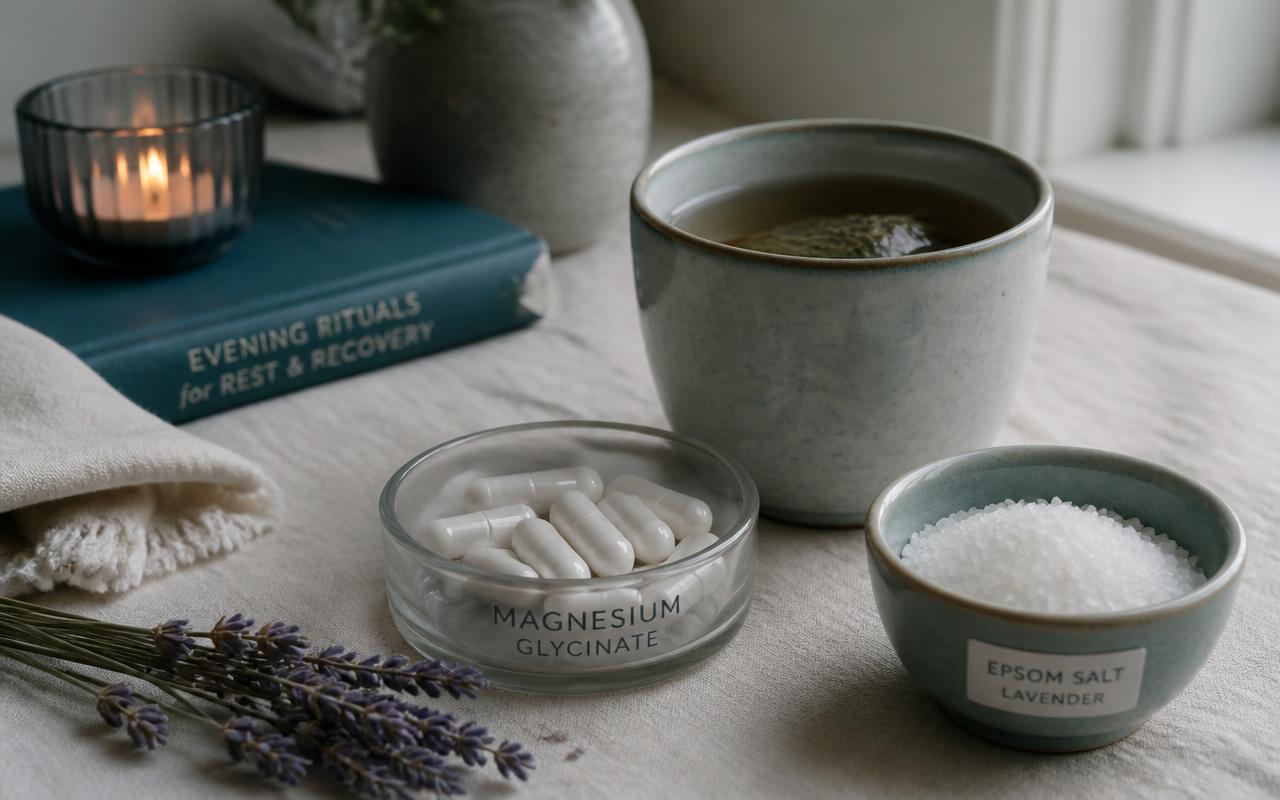
My evening non-negotiable
Of all the supplements on my kitchen shelf, magnesium is the one I reach for every single evening. Not because it's trendy, but because I genuinely feel the difference when I take it — and I feel it even more when I don't.
I take magnesium glycinate, usually after my last meal or about an hour before bed. It's the form I've settled on after years of trial and error because it's gentle on the stomach, well absorbed, and has a noticeably calming effect on my nervous system. For a woman in her 50s who trains, runs a business and juggles the same mental load as every other midlife woman, that calm is worth its weight in gold.
Why magnesium matters so much in midlife
Magnesium is involved in over 300 biochemical reactions in the body. It helps regulate muscle and nerve function, blood sugar, blood pressure, energy production, bone density, sleep and stress. In other words, it touches almost every system that starts to feel harder in your 40s and 50s.
The challenge is that many women in midlife are already low in magnesium before they even notice symptoms. Stress depletes it. Poor sleep depletes it. Alcohol, caffeine and certain medications can reduce absorption. And if you exercise — particularly if you sweat — you lose even more.
What exercise and sweat do to your magnesium levels
This is the bit I really want you to hear. If you're strength training, walking, doing classes, cycling, or anything that makes you sweat, you are losing magnesium through your skin. The harder and longer you train, and the more you sweat, the more you lose.
That matters because active women already have higher magnesium needs than sedentary women. If you're training regularly and not replacing what you lose, you may notice:
- Muscle cramps or twitching, especially in the calves or eyelids.
- Slower recovery and muscles that feel heavy or tight for days.
- Poor sleep, especially difficulty switching off at night.
- Low energy or feeling wired-but-tired through the day.
- More pronounced PMS or perimenopause symptoms, since magnesium supports hormone balance and mood.
I used to think cramps were just part of training hard in my 50s. They're not. They were my body asking for more magnesium.
The benefits I personally notice
Supports muscle recovery and relaxation
Magnesium is essential for muscle contraction and relaxation. Without enough of it, muscles can feel tight, crampy or slow to recover after training. I notice the difference on the days I take it — my legs feel less heavy after a lower-body session and I wake up with fewer niggles.
Calms the nervous system and helps sleep
Magnesium glycinate in particular is known for being gentle, well-absorbed and calming. It supports GABA, the neurotransmitter that helps your brain switch off. For midlife women whose sleep is already being disrupted by hormones, stress or a busy mind, this is often the most felt benefit.
Replaces what you lose through sweat
If you exercise — especially if you train hard, use a sauna, or sweat heavily — you lose magnesium through your sweat. Many active women are already running low without realising it, and training only increases the demand. Replacing it daily makes a real difference to recovery, energy and how you feel in your body.
Supports bone and heart health
Magnesium works alongside calcium and vitamin D to support bone density, which becomes a priority after menopause. It's also important for heart rhythm, blood pressure and overall cardiovascular health — all areas that deserve more attention in midlife.
Helps manage stress and energy
Magnesium is involved in hundreds of biochemical reactions, including those that regulate cortisol, blood sugar and energy production. When levels are low, you may feel wired but tired, anxious, or reliant on caffeine to get through the day. Topping up can help your body handle stress from a stronger baseline.
Not all magnesium is the same
If you've ever taken magnesium and spent the next morning on the toilet, you were probably taking magnesium oxide or citrate — forms that are cheap but poorly absorbed and have a strong laxative effect. That's not what you want for daily recovery and nervous system support.
Magnesium glycinate is magnesium bound to glycine, an amino acid with calming properties. It's one of the most bioavailable and gentle forms, meaning your body actually absorbs and uses it. It's my go-to for:
- Evening relaxation and better sleep quality.
- Muscle recovery without digestive upset.
- Long-term daily use, not just occasional relief.
Other forms have their place — magnesium threonate for brain health, magnesium malate for energy, magnesium citrate if constipation is the issue — but for the goals most midlife women care about, glycinate is the one I'd start with.
My recommendation: Metagenics Magnesium Glycinate
The product I personally use and recommend is Metagenics Magnesium Glycinate. It's a high-quality, well-absorbed formula and one I trust enough to take myself and suggest to the women I coach.
This is an affiliate link, which means if you purchase through it I may earn a small commission at no extra cost to you. I only ever recommend products I genuinely use and believe in — and this is one I keep in my own supplement cupboard.
A soothing add-on: Epsom salt baths
On days when I've trained hard or my muscles feel particularly tight, I also love an Epsom salt bath in the evening. Epsom salts are magnesium sulphate, and while the science on how much magnesium actually absorbs through the skin is mixed, I find the ritual itself — warm water, quiet, maybe some lavender — is a powerful part of winding down.
Even if the magnesium absorption is modest, the relaxation effect is real. It lowers cortisol, eases sore muscles and signals to your body that the day is done. If you want to try it, I use these Epsom salts — again, an affiliate link, but one I use myself.
How I take it
I take my magnesium glycinate in the evening, usually with my last meal or a small snack. Taking it with food improves absorption and reduces any chance of stomach discomfort. For most midlife women, a dose providing 200–400mg of elemental magnesium per day is a sensible starting point, though individual needs vary.
If you're new to magnesium, start low and build up. And if you take any prescription medication — especially blood pressure medication, antibiotics, osteoporosis drugs or diuretics — check with your GP or pharmacist first, as magnesium can interact with some medicines.
The bottom line
Magnesium isn't a magic pill. But it is one of the most supportive, multi-tasking minerals you can give your body in midlife — especially if you're active, sweaty, stressed or not sleeping as well as you'd like.
For me, magnesium glycinate in the evening has become as routine as brushing my teeth. It supports my recovery, calms my nervous system, and helps me sleep in a body that works hard all day. If you're training through midlife, I'd strongly consider making it part of yours too.
As always, this article reflects my own lived experience and what I personally implement and recommend. It's not medical advice — please speak to your GP or a qualified practitioner before starting any new supplement, particularly if you have a health condition or take medication.
You may also enjoy
Keep reading — more practical advice from the Resource Hub.

Collagen in Midlife — Does It Actually Work?
Some women swear by it, others say it's a waste of money — and both can be right. Why we lose collagen in midlife, what it does for skin, joints and bone, and why dose, vitamin C and consistency decide whether you notice anything.
Read article
Omega-3 in Midlife — Why I Take a Fish Oil Every Day
Why omega-3 is one of my daily non-negotiables for midlife women — the omega-6 imbalance, what EPA and DHA actually do, and how a good fish oil supports inflammation, heart, brain and recovery.
Read article
Vitamin D — The Hormone Most Midlife Women Are Missing
Vitamin D isn't really a vitamin — it's a hormone. Why it matters for bones, muscle, mood, immunity and metabolism in midlife, and what deficiency really looks like in women over 40.
Read articleCan't find a convenient time? Email me at hello@craftyourbody.com and I'll find a slot that works for you.