Why Recovery Matters More Than Pushing Harder in Midlife
By Caroline Grey, Founder of Craft Your Body
From six days a week to three — and stronger than ever
When I was competing, I trained six days a week. Long sessions, high volume, very little time off. It worked — I competed until my early 40s, riding a hormonal environment that forgave almost anything I threw at it.
In my 50s now, post-menopause, the rules have changed. I currently train three days a week. I was definitely stronger and leaner in my competing days — but I'm happier, healthier and my body isn't as stressed now. That's the biggest difference. The difference isn't more effort. It's more recovery. That's not to say you can't push yourself — I absolutely do, and I'm working toward building back up to four days. But the key is balancing those hard sessions with proper recovery. That's where the real gains are made.
This is one of the hardest mindset shifts I see midlife women make — especially those of us who came up in the "no pain, no gain" era. We were taught that more is better, that rest is weakness, that if you're not exhausted you're not working hard enough. In midlife, that approach actively works against you. It's not about constantly pushing more — it's about training with intent, recovering with intent, and fuelling your body properly so those hard sessions actually translate into progress.
Why "more" stops working in midlife
From perimenopause onwards, oestrogen and progesterone — both crucial for muscle repair, joint health and nervous system regulation — start to decline. At the same time, baseline cortisol tends to creep up. The result: you take longer to recover from a hard session, you adapt more slowly, and chronic over-training tips you straight into fatigue, poor sleep, weight gain around the middle, mood dips and injury.
The women who thrive in midlife aren't the ones doing the most. They're the ones training with intent, recovering with intent, and building a life around their training rather than the other way round.
My five pillars of midlife recovery
Train smarter, not more — three quality sessions beat six rushed ones
As a competitor I trained six days a week. Long sessions, high volume, very little time off. It worked — I competed until my early 40s and was in amazing shape, driven by aesthetics and performance goals. In my 50s now, post-menopause, I'm still in great shape — but my focus has shifted. I'm no longer driven by aesthetics; I'm focused on health and longevity. The hormonal environment has changed, and so has my approach. Today I train three days a week. Each session is focused, progressive and built around heavy compound strength work. I'm fully recovered when I walk into the gym, which means every session counts. Quality over quantity isn't a compromise in midlife — it's the upgrade. Recovery days are where the gains are made, especially when paired with the right nutrition.
Recovery days are not rest days — they're when adaptation happens
Strength, muscle and bone density aren't built in the gym. They're built in the 48–72 hours afterwards, while your body repairs the micro-damage you created. Skip recovery and you skip the adaptation. In midlife, with lower oestrogen and progesterone supporting the repair process, recovery windows actually need to be longer, not shorter. I now treat my non-training days as productive days for my body, not wasted ones. That mindset shift is everything. You're not being lazy — you're being strategic.
Walking — the most underrated training tool of midlife
If I could prescribe one thing to every woman in midlife, it would be daily walking. I have a dog, so I walk outside daily. It builds aerobic capacity without spiking cortisol, supports lymphatic drainage, regulates blood sugar after meals, improves sleep, lifts mood through gentle endorphin release and keeps the joints mobile. Top tip: if you can't fit in one long walk, break it into smaller sections throughout the day. A short 20–30 minute walk after your evening meal is particularly effective for digestion and blood sugar control. And if you struggle to find time, consider a walk pad at your desk — every step counts. (As an Amazon Associate I may earn a commission from qualifying purchases.)
Shop walk pad on AmazonSaunas — heat, hormesis and a calmer nervous system
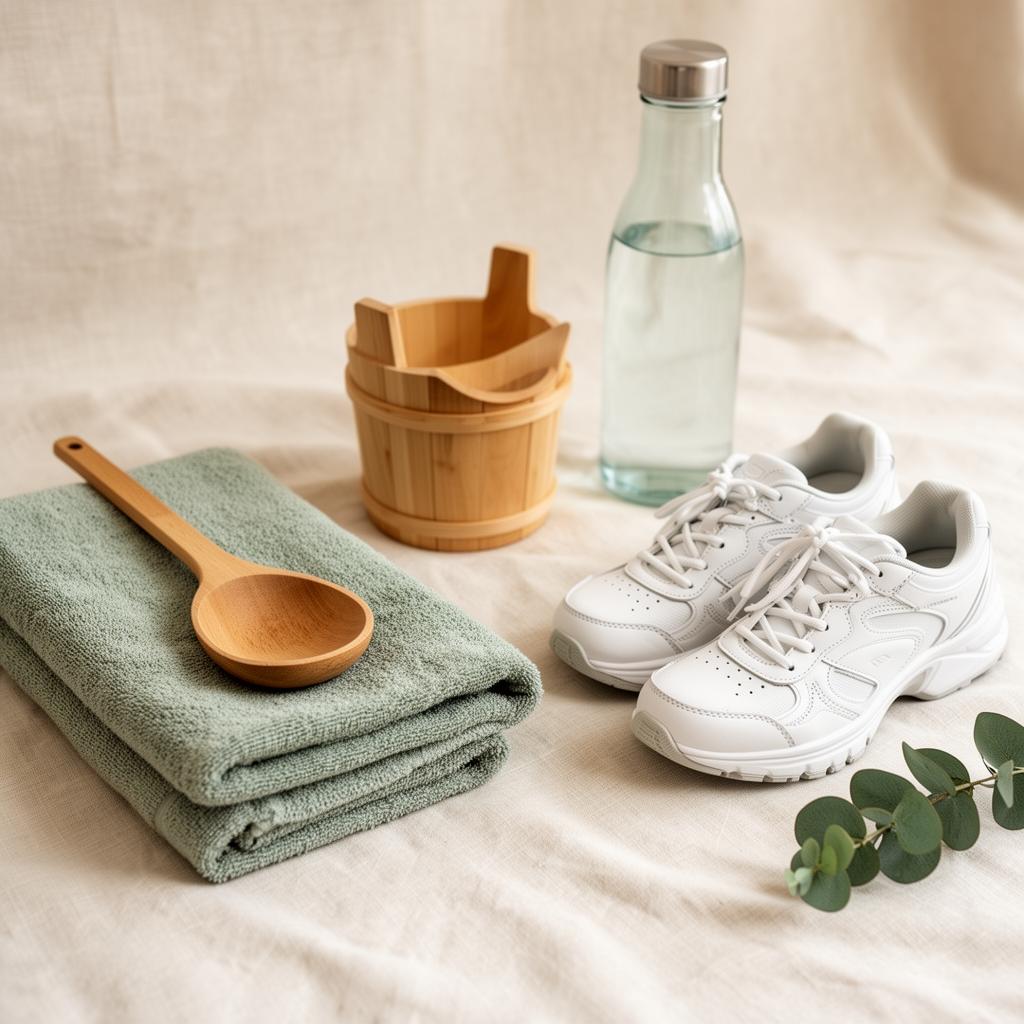
Regular sauna use is one of the most evidence-backed recovery tools available. The heat triggers a mild stress response (hormesis) that improves cardiovascular function, supports detoxification through sweat, increases growth hormone, lowers blood pressure over time and significantly reduces all-cause mortality in long-term studies. Just as importantly for midlife women, it shifts the nervous system out of fight-or-flight and into deep parasympathetic recovery — exactly what an over-stressed perimenopausal system needs. I use mine 2–3 times a week, 20 minutes at a time, followed by a cool shower and plenty of water with electrolytes.
Sleep, food and stress — the silent recovery trio
No amount of saunas or walking will compensate for poor sleep, under-eating or chronic stress. Sleep is where 95% of your physical recovery happens. I use an alarm clock instead of my phone to keep screens out of the bedroom — it's been a game-changer for my sleep quality. (As an Amazon Associate I may earn a commission from qualifying purchases.) Adequate protein (I aim for 1.6–2g per kg of bodyweight) provides the building blocks. And managing stress — through boundaries, breathwork, time outdoors and saying no — keeps cortisol in check so your body can actually use the training stimulus you give it. Recovery is not one thing. It's the whole environment you create around your training.
Shop alarm clock on AmazonThe takeaway
Pushing harder is rarely the answer in midlife. Training smarter, recovering deliberately and supporting your nervous system with simple, daily tools — walking, sauna, sleep, food, stress management — is what builds a strong, resilient, capable body in your 40s, 50s and beyond.
You don't need to do more. You need to do the right things, consistently, and give your body the space to actually adapt to them. That's how you get stronger as you get older — not in spite of midlife, but because you're finally training in a way that respects it.
You may also enjoy
Keep reading — more practical advice from the Resource Hub.
Beyond the Class — Why the Gym Builds the Midlife Body You Want
Classes are brilliant for community and motivation. But the gym is where midlife women build the strength, bone density and physique they want — and how to combine two classes with two gym sessions for the best of both worlds.
Read article
5 Quick & Balanced Lunches for Midlife Women
Five fast, satisfying lunches built around 30–35g protein, healthy fats and fibre for steady afternoon energy — plus the simple formula for building your own. Free printable recipe cards included.
🍂 September Edition · The Midlife ResetRead article
Why September is the Real New Year for Midlife Women
Forget January. September is when the season changes, the routine returns and you get to take back control before Christmas. Week one of the Midlife Reset — structure, protein and the habits that hold.
🍂 September Edition · The Midlife ResetRead articleCan't find a convenient time? Email me at hello@craftyourbody.com and I'll find a slot that works for you.